
Auxiliary Communication (AUXCOMM) – More than radio equipment
Auxiliary Communication (AUXCOMM) – More than radio equipment
By Manuel A. Otero III, DCJ (KN4ZDM)
Introduction
The information systems that underpin modern disaster management have to be dependable, robust and interoperable. Auxiliary communications (AUXCOMM) are required to keep everyone informed of what’s happening and to continue working together when conventional communications systems are down, overloaded or unavailable. The Incident Command System (ICS) employs qualified personnel, defined protocols and a broad range of communications instruments to manage organized emergency communications that are recognized nationwide. That’s the magic of AUXCOMM. “It’s more than just a group of radios or frequencies,” states the Cybersecurity and Infrastructure Security Agency (CISA), n.d. Once you know the origins and purpose of AUXCOMM, you can see why it is so vital in being prepared for and responding to crises.
The Evolution of AUXCOMM Over the Years
The AUXCOMM concept was developed as a means of providing more uniform volunteer emergency messages across locations. Working with public safety authorities was not always simple for amateur radio operators and volunteer groups such as the Amateur Radio Emergency Service (ARES) and Radio Amateur Civil Emergency Service (RACES), but they have always been extremely helpful during disasters (Klinc, 2022).The notion of AUXCOMM was created in 2009 by the US Department of Homeland Security (CISA) AUXCOMM aimed to provide a consistent approach for public safety professionals to conduct their tasks by connecting volunteer speakers to the National Incident Management System (NIMS) and the Incident Command System (ICS) (CISA, n.d.). AUXCOMM is a structure that enables diverse communication technologies to fit effectively inside the government emergency management systems (EmComm Info, n.d.). COMU at ICS utilizes Auxiliary Communicators (AUXC) who are also often referred to as AUXCOMM personnel. Sometimes AUXCOMM is named a Technical Specialist, and in certain state emergency management systems it is a unique career (EmComm Info, n.d.). Training for AUXCOMM is largely about interoperability, being professional in EOCs and working jointly with COMLs (CISA, n.d.). AUXCOMM, however, does not wish to be affiliated with groups. Auxiliary speakers are trained to set aside their own organizational identities and to help accomplish incident goals, regardless of their origins or group affiliations (State of Michigan, n.d.). This balance allows people to be adaptable and speak to government authorities in complex situations.
What other gear does AUXCOMM have besides radios?
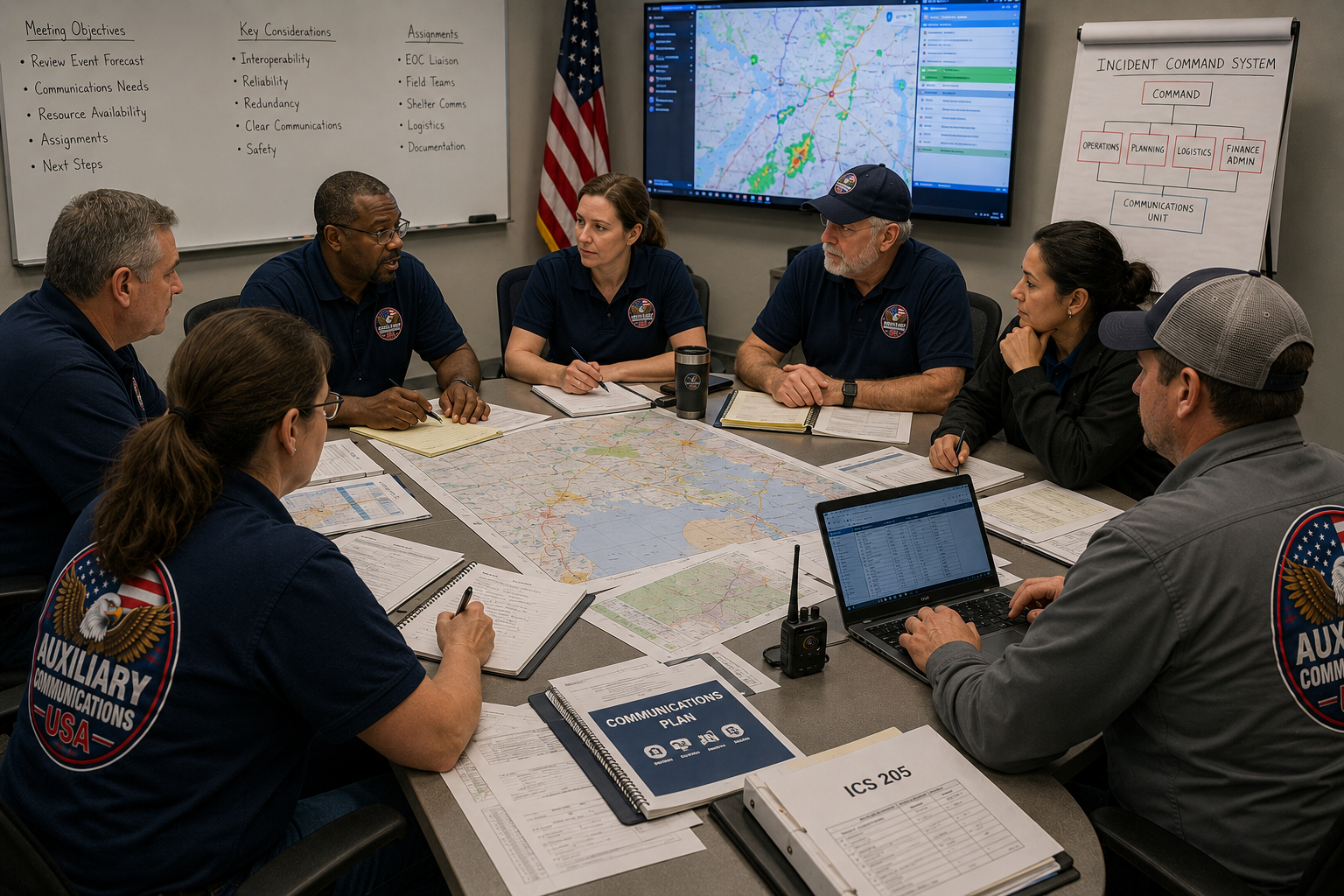
More than radios, even if they are an integral aspect of the notion, is AUXCOMM. AUXCOMM is the personnel, training, planning and policy arm. Depending on the scenario and their credentials, auxiliary operators may communicate with each other via data networks, amateur radio, public safety land mobile radio systems, or other permitted means (Klinc, 2022; Indiana Department of Homeland Security, n.d.). The primary distinction is that AUXCOMM relies more on trained professionals who know how to manage crises than on those who are just competent at technical radio operating. The AUXCOMM classes give the students an understanding of ICS concepts, EOC etiquette, and communication needs. They also establish national standards for volunteer communicators (CISA, n.d.). Operations will run more smoothly, there will be fewer mistakes, and people will trust public safety services more.
Why being strong and ready for emergencies is important
More and more people are learning that AUXCOMM is an important tool for emergency contacts, especially in all-hazards situations where regular systems fail or get worse (Klinc, 2022). AUXCOMM's ability to be flexible and adaptable could help emergency management groups that don't have the means or staff to set up their own backup communication systems. AUXCOMM programs at the state and local levels boost preparation by developing long-lasting connections between volunteers and disaster management, holding exercises, and ensuring that there are always competent individuals ready to be deployed to aid (State of Michigan, n.d.). These initiatives make communities more resilient by ensuring that communication technologies can rapidly adapt to changing event conditions.
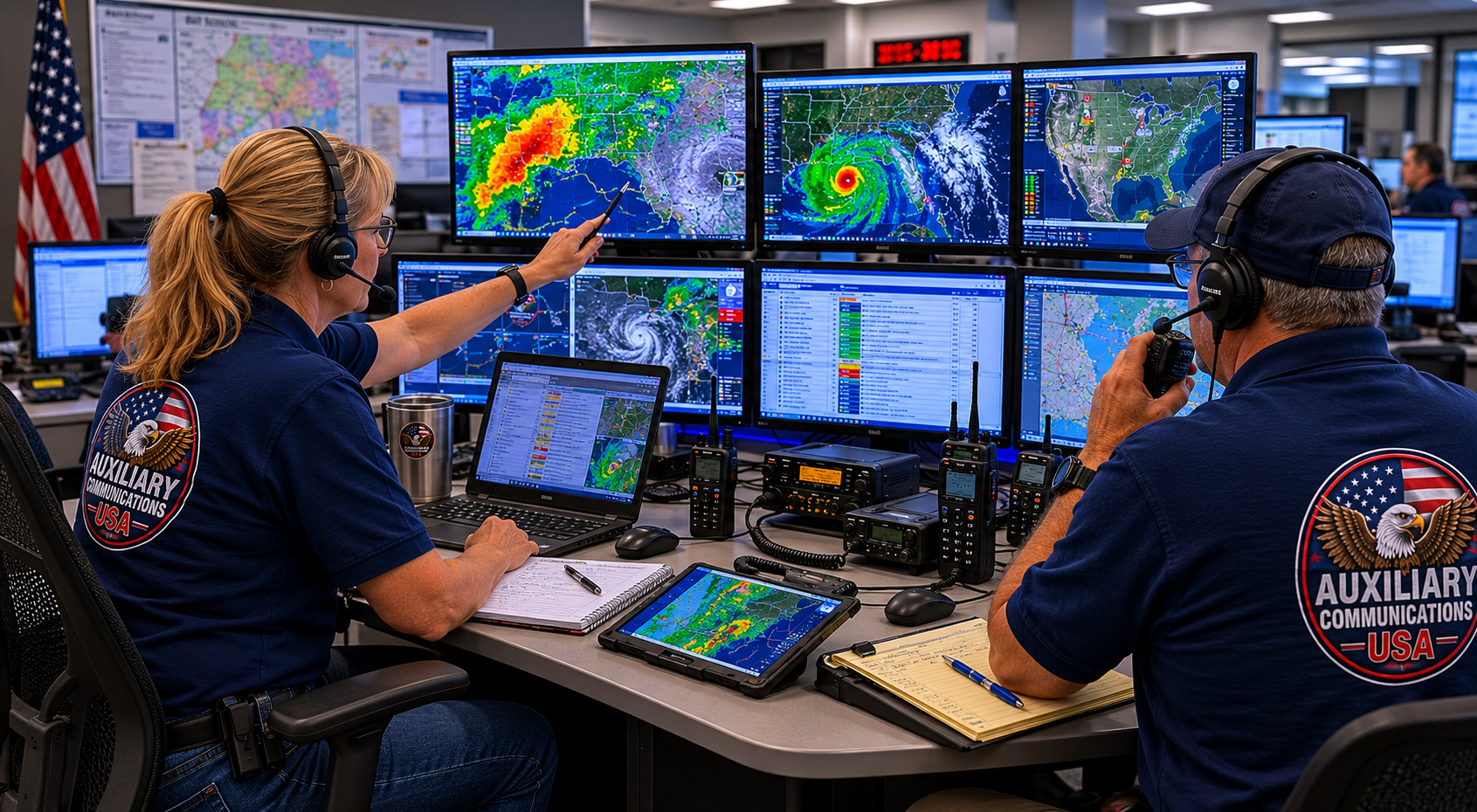
That being said AUXCOMM is a huge stride forward in emergency communications since it converts volunteer radio support into a professional, integrated function that fulfills national incident management criteria. Its history demonstrates that it has moved from unofficial solutions that concentrate on tools towards a system that encompasses everything and places a lot of weight on training, coordination and interoperability. AUXCOMM claims radios alone are not adequate for successful emergency contact. Trained personnel and established facilities must also be provided.
References
Auxiliary Communications USA. (n.d.). About AUXCOMM. https://www.auxcommusa.org/
Cybersecurity and Infrastructure Security Agency. (n.d.). Auxiliary emergency communications overview. https://www.cisa.gov/safecom/auxiliary-emergency-communications-overview [cisa.gov]
EmCommInfo. (n.d.). AUXCOMM: Auxiliary communications. https://emcomminfo.com/auxcomm/ [https://emcomminfo.com/auxcomm/]
Indiana Department of Homeland Security. (n.d.). AUXCOMM emergency communications support. https://www.in.gov/dhs/emergency-management-and-preparedness/eoc-operations/communications-and-dispatch/radio-amateur-civil-emergency-service/
Klinc, E. (2022). EMCOMM: What is AUXCOMM and why is it important? OnAllBands. https://www.onallbands.com/emcomm-what-is-auxcomm-and-why-is-it-important/
State of Michigan. (n.d.). What is auxiliary communications (AUXCOMM)? https://www.michigan.gov/-/media/Project/Websites/MPSCS/What_is_Auxiliary_Communications_AUXCOMM.pdf